
Drazen Zigic // Shutterstock
Fall is supposed to be when the weather cools down. This year, that cooldown has been slow to arrive. Summer 2026 was the hottest on record for the contiguous U.S., averaging 74.4 F, or 3 F above the 20th-century average. September didn’t bring much relief, either. Dozens of cities had their hottest first half of September on record, with many running 6 to 12 degrees above normal.
Travelers are already making adjustments. A recent survey from Vogo, a hotel and vacation rental search platform, asked more than 1,000 U.S. leisure travelers how heat is changing their trips, and over 7 in 10 said they plan to shift where or when they travel to dodge the extreme heat forecast for this summer and fall. For travelers looking to plan their fall and holiday trips, Vogo shares six ways to plan around the heat.
Key Takeaways
- More than 7 in 10 travelers say they will adjust their plans to avoid extreme summer and fall temperatures this year, and 26% say it’s more of a consideration than in prior years.
- Among travelers changing their plans, 44% have chosen or would choose a different destination specifically to avoid heat.
- Air conditioning (49%) ranks as the top accommodation priority for stays in cooler destinations.
6 Ways to Plan Fall and Holiday Travel Around the Heat
1. Set your heat limit before you pick dates
The Southwest shows how long heat can last. Phoenix averages 111 days a year at 100 F or hotter, with triple-digit days usually falling between May and October.
Most travelers hit their limit well before that. When asked what forecasted high would make them seriously reconsider a trip, 58% named a temperature below 100 F. Timing is the most common adjustment: Among travelers open to adjusting, 53% have moved or would consider moving a trip out of the hottest months.
So figure out your breaking point before you book, then check it against historical averages for when you want to travel. If a destination usually runs hotter than you can handle at that time of year, it’s easier to pick different dates now than to change plans later. Keep an eye on the extended forecast as the trip gets closer, too, since a heat dome can park over a region with little warning.
2. Use fall to try a cooler destination
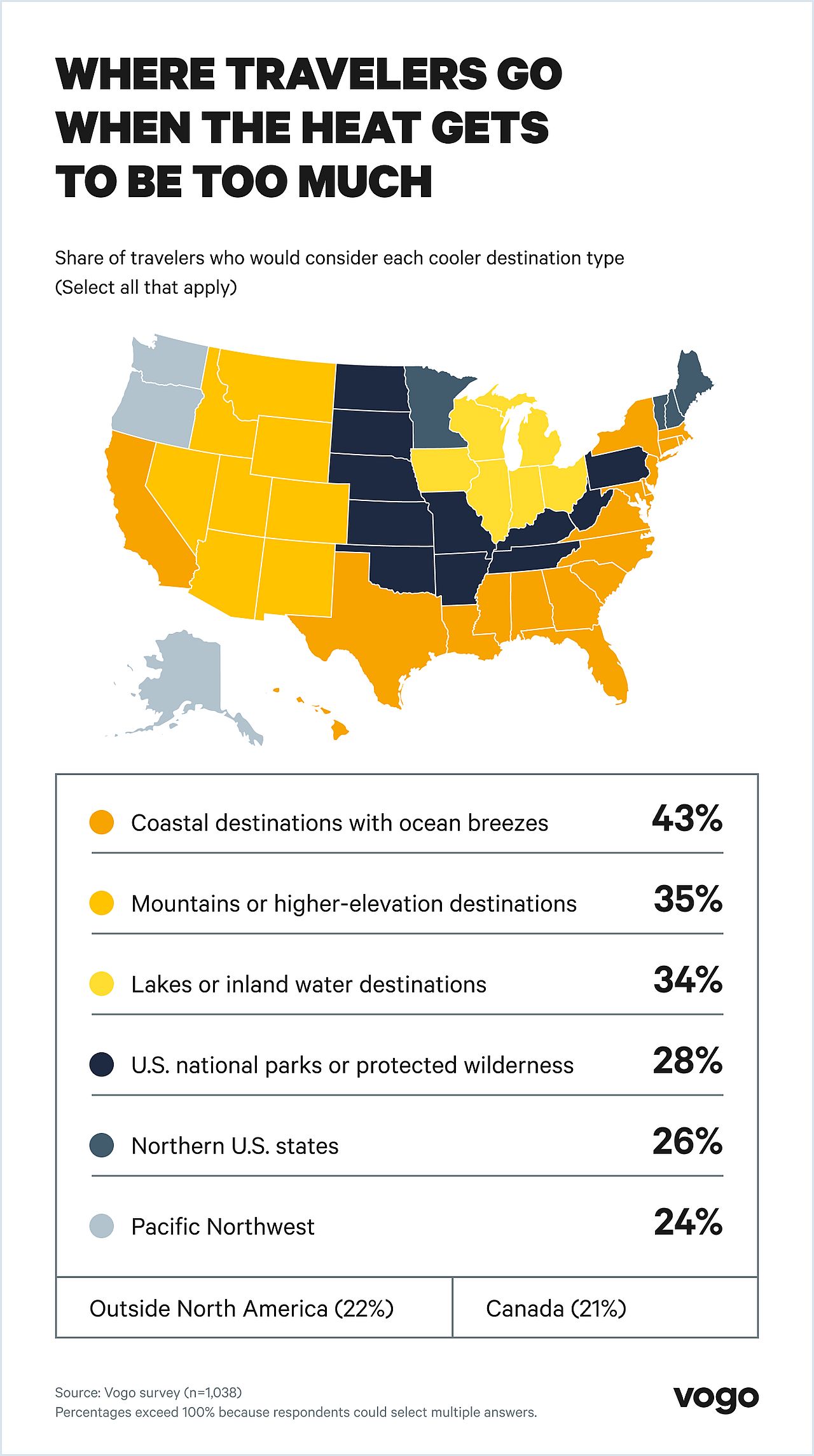
When heat pushes travelers to a cooler destination, coastal spots with ocean breezes (43%) and mountains or other high-elevation areas (35%) top the list, followed by lakes and national parks. Fall is a great time to test out these types of trips, since foliage season draws many travelers to mountain and lake regions.
Switching plans can also be a pleasant surprise. Among travelers open to adjusting their plans for heat, 24% say it pushed them toward places they wouldn’t have considered otherwise, and 22% now prefer cooler destinations.
Not every trip needs to move, though. If you’re set on a warm-weather holiday trip, timing matters as much as the destination. Palm Springs, for example, averages highs of about 109 F in July and only 69 F in December.
Vogo
3. Pick a booking strategy: lock in early or stay flexible
About a third of travelers now book earlier because of summer heat concerns, while a quarter go the other way and book later to stay flexible.
Holiday travel narrows that choice. AAA recommends booking Thanksgiving travel by early to mid-October and Christmas and New Year’s travel by the end of October. AAA also advises reserving hotels and rental cars as soon as dates are confirmed, since holiday inventory can sell out quickly.
For holiday trips, the better approach is to book early with a safety net. Early bookers should look for the flexibility of refundable rates or free cancellation, so a late heat wave doesn’t lock them into a miserable trip.
Travelers who prefer to stay flexible can still keep two sets of dates or destinations in mind, but the holiday deadlines don’t leave as much time to wait for a clearer forecast. Just be sure to read the cancellation terms before paying, whichever method you choose.
4. Confirm the cooling before you commit
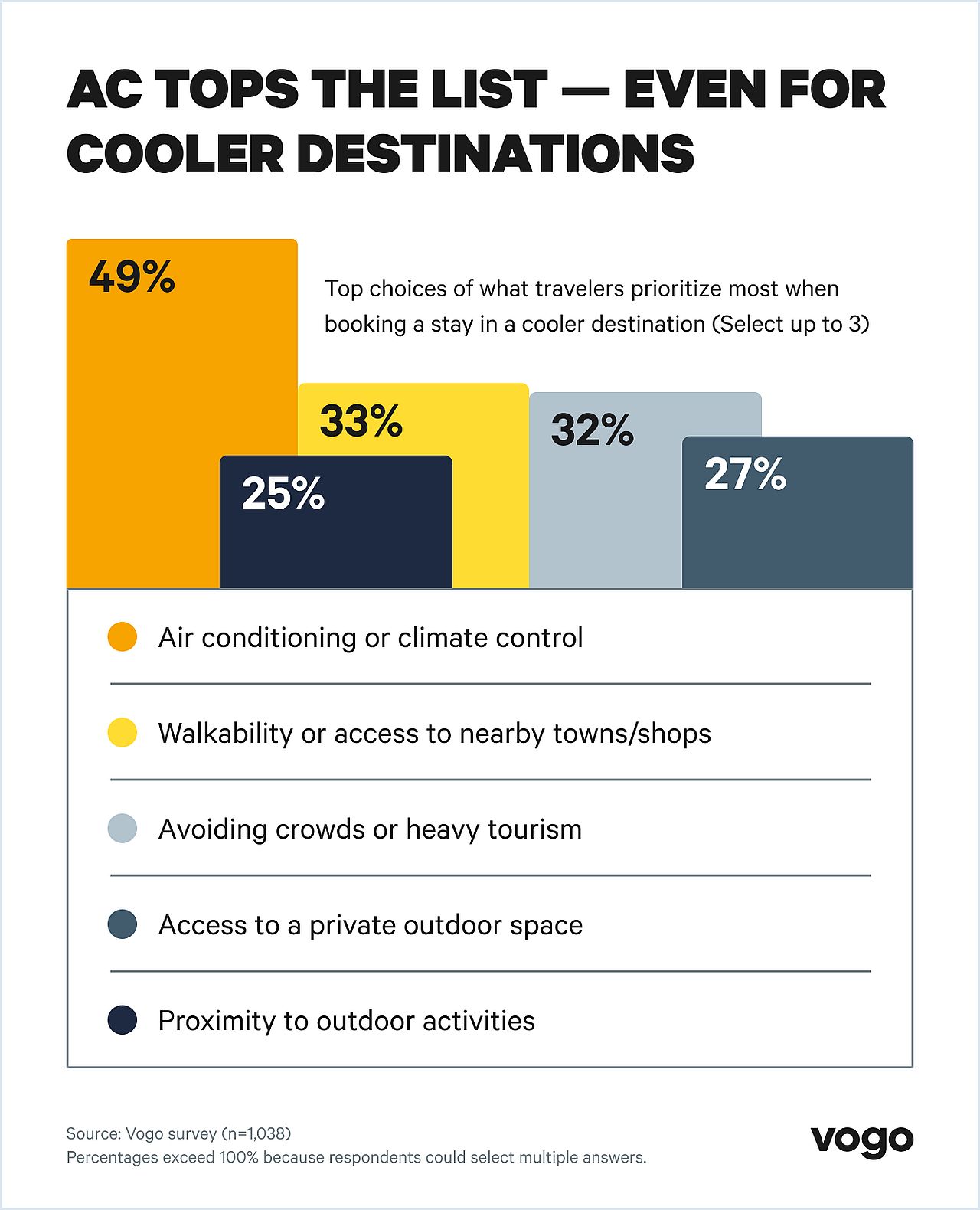
More than half of travelers (53%) have booked a place that turned out hotter or less well-cooled than the listing suggested, and 21% have had it happen more than once. People don’t forget trips like that, which helps explain why AC ranked as the top lodging priority even for travelers heading somewhere cooler (49%).
The risk of insufficient cooling grows abroad. More than 9 in 10 U.S. homes have air conditioning, compared with roughly 23% of households across Europe. So don’t assume a trip to Paris will come with the AC that a similar place back in the U.S. would have.
Before booking, search the listing and recent reviews for mentions of AC, and ask the host whether it covers the whole place or just the bedrooms.
Vogo
5. Book morning flights if traveling out of hot airports
Heat can disrupt a trip before it even starts. Hot air is thinner, which makes it harder for planes to take off. Airlines sometimes need to delay departures or lighten the load by bumping passengers and cargo. When the temperature reached 114 F in Las Vegas this July, American Airlines offered compensation to passengers who gave up their seats voluntarily so a flight could take off safely. The FAA says temperatures can sometimes climb past the maximum conditions used in aircraft testing.
Desert airports see this most, and they line up with places travelers already avoid or would reconsider in summer. Las Vegas (26%) and Phoenix/Scottsdale (25%) both rank among the top destinations travelers say they’ve avoided or would reconsider because of the heat.
Afternoons are usually the hottest part of the day, meaning morning departures are a safer bet. On hot travel days, leave extra time between connections so one delay doesn’t knock out the entire trip.
6. Budget for comfort and plan your days around the heat
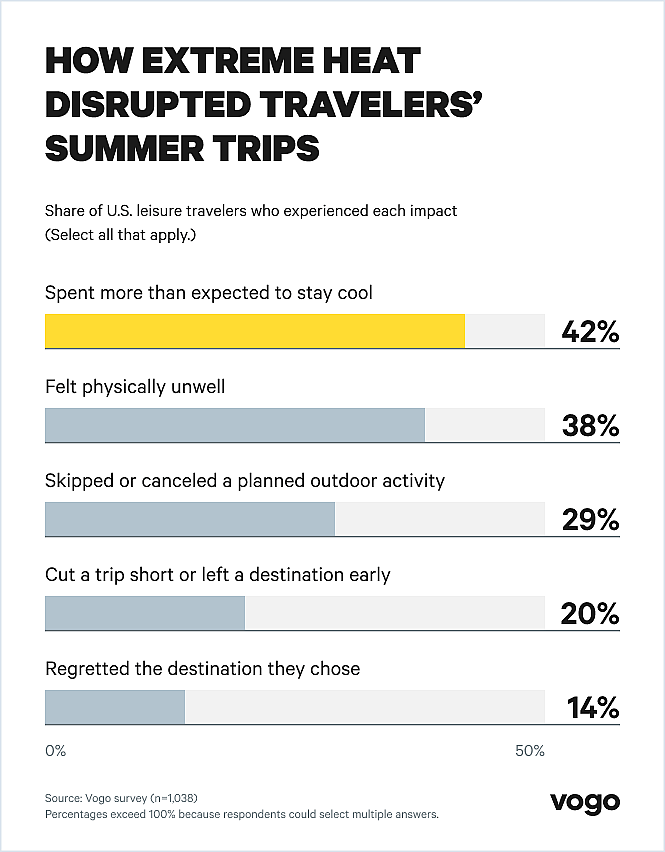
Staying cool costs money. Forty-two percent of travelers spent more than expected on a past summer trip trying to beat the heat, and that jumps to 57% for people who usually travel with kids.
Heat also changes how you spend your days. Thirty-eight percent of travelers felt physically unwell from things like heat exhaustion or dehydration on a past trip, so plan outdoor activities for mornings and evenings.
For the hottest hours of the day, build a cooling cushion into your trip budget for indoor activities when the afternoons get too hot to be outside. If you’re not sure how much to budget for your cooling comfort, note that 82% of travelers who say they’re willing to pay more for a cooler stay say they wouldn’t go past an extra $100 a night.
Vogo
Methodology
Centiment surveyed 1,038 U.S. adults aged 18 and over for Vogo from July 10-15, 2026. All respondents had taken an overnight leisure trip in the past 12 months or planned one in the next 12. Data is unweighted, with a margin of error of about plus or minus 3% at a 95% confidence level. Some findings reflect smaller groups: travelers who did not rule out adjusting their travel plans for heat (n=808), those who would consider a cooler destination type (n=914), those willing to pay more for lodging in a cooler destination (n=241), and those who usually travel with children (n=172). Select-all-that-apply percentages should not be summed.
This story was produced by Vogo and reviewed and distributed by Stacker.